
Running a restaurant, café, hotel, or catering company in the UK has never been more challenging. Rising ingredient prices, higher energy bills, staffing shortages, and supply chain disruptions are squeezing margins from every direction. For many operators, growth alone is no longer enough to stay profitable. The real focus has shifted towards smarter spending and tighter control. That is where effective cost reduction becomes essential. Businesses that manage their expenses early tend to survive difficult periods and grow with confidence. Many hospitality operators now turn to experienced partners such as ESConnect to improve procurement, negotiate better supplier terms, and streamline operations without compromising quality or service.
Why savings matter more than ever
The hospitality industry traditionally works on slim margins. Even a small rise in utilities or supplier prices can erase a month’s profit. Inflation and ongoing economic pressures have only increased the strain. A clear cost-reduction strategy protects cash flow and provides business owners with stability during uncertain times.
Think about it practically. Saving just £150 a day on purchases or waste can add up to more than £50,000 each year. That extra capital could fund refurbishments, marketing campaigns, or staff training. Minor improvements quickly compound, which is why controlling spend is just as important as attracting customers.
Start with a clear view of your spending
Before making any changes, you need complete visibility. Meaningful cost reduction is impossible without a clear understanding of where your money goes.
Begin with a detailed spend audit. List every supplier, contract, and recurring payment. Many businesses are surprised to discover duplicate vendors or different prices for the same items. Review invoices monthly and track patterns in food, drinks, and consumables. Even simple spreadsheets can highlight inefficiencies that have gone unnoticed for years.
Once you know your numbers, smarter decisions follow naturally. You can quickly spot overpriced suppliers and unnecessary purchases.
Strengthen procurement and supplier management
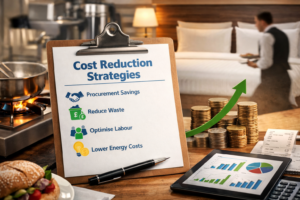
Procurement is often the fastest area to unlock savings. Smarter sourcing delivers immediate cost reduction without affecting the guest experience.
Start by consolidating suppliers. Working with fewer vendors increases order volumes and strengthens your negotiating position. This often leads to discounts, better payment terms, and improved service levels. Next, review your contracts. Fixed pricing agreements protect you from sudden increases and make budgeting easier.
Group buying schemes or specialist procurement support can further reduce costs. Many hospitality businesses simply pay more because they purchase alone rather than leveraging collective volume. Regularly benchmarking prices also helps ensure you stay competitive. Loyalty is valuable, but overpaying hurts margins.
Reduce waste and improve stock control
Food waste quietly drains profits every day. Spoiled ingredients, poor storage, and over-ordering can cost thousands annually. Tackling waste is one of the simplest ways to achieve quick Cost Reduction.
Use the FIFO method to use the older stock first. Track expiry dates carefully and avoid bulk orders unless demand is certain. Inventory systems help monitor usage and forecast accurately. This prevents both shortages and excess.
Standardised recipes keep portions consistent and protect margins. Menu engineering also helps by removing low-profit dishes and focusing on items that generate stronger returns. Less waste not only saves money but also improves sustainability, something customers increasingly value.
Optimise labour without cutting service
Labour is usually the largest expense after food. However, reducing staff numbers rarely leads to long-term success. Instead, smarter planning supports sustainable cost reduction.
Match staffing to demand. Analyse busy and quiet periods, then schedule accordingly. Many venues overstaff during slower hours while struggling during peak times. Cross-training employees to handle multiple tasks adds flexibility and reduces reliance on temporary staff.
Technology can support teams as well. Self-order kiosks, online bookings, and digital payments speed up service while reducing pressure on employees. The aim is not fewer people, but better productivity.
Lower energy and utility expenses
Energy prices across the UK have risen sharply, making efficiency a priority. Practical upgrades contribute significantly to ongoing cost reduction.
Switch to LED lighting, invest in energy-efficient appliances, and maintain refrigeration equipment regularly. Smart thermostats automatically regulate heating and cooling. Even simple habits, such as turning off unused machines, make a difference.
These improvements may appear small, but monthly savings quickly add up. Many businesses recover their investment within a year.
Use digital tools to work smarter
Manual processes often lead to mistakes and overspending. Digital solutions support continuous cost reduction by improving accuracy and reducing time spent.
E-procurement platforms allow instant supplier comparisons. Inventory software prevents over-ordering. Data analytics forecast demand and guide smarter purchasing decisions. Automation also reduces paperwork, freeing managers to focus on customers and growth rather than administration.
Technology does not replace good management. It strengthens it.
When expert support makes sense
Sometimes teams simply lack the time or expertise to analyse spending in depth. External specialists can significantly accelerate cost-reduction efforts.
Procurement consultants bring industry insight, supplier networks, and negotiation experience that most operators lack in-house. They often uncover hidden savings opportunities that businesses would not spot on their own. Professional guidance shortens the path to stronger margins and more efficient operations.
Conclusion
Hospitality businesses do not need drastic cuts to remain profitable. Consistent improvements deliver lasting results. By auditing spend, strengthening procurement, reducing waste, improving labour planning, lowering energy use, and adopting digital systems, you create reliable cost reduction across the entire operation. Small daily savings quickly become significant annual gains. Start with one area, measure progress, and treat efficiency as an ongoing habit rather than a one-off project. With steady focus and smarter decisions, your business can protect profits while maintaining the service quality guests expect.
FAQs
1. What is cost reduction in hospitality?
It means lowering expenses while maintaining service quality and customer satisfaction.
2. Where should businesses begin saving money?
Start with a spend audit and supplier review.
3. How does procurement help?
Better negotiation and bulk buying reduce purchasing costs.
4. Can waste really impact profits?
Yes, food waste alone can cost thousands annually.
5. Should staff numbers be reduced?
Efficiency improvements work better than layoffs.
6. What tools help manage stock?
Inventory and POS systems provide real-time tracking.
7. Do energy upgrades save money?
Yes, efficient equipment cuts long-term bills.
8. Are digital systems necessary?
They reduce errors and improve decision-making.
9. When should consultants be hired?
When internal teams lack time or expertise.
10. Can small savings make a difference?
Absolutely. Daily reductions add up significantly over a year.